Spotting Success Before Harvest: A Q&A with Ocean Spray Agricultural Scientist, Crysta Taylor
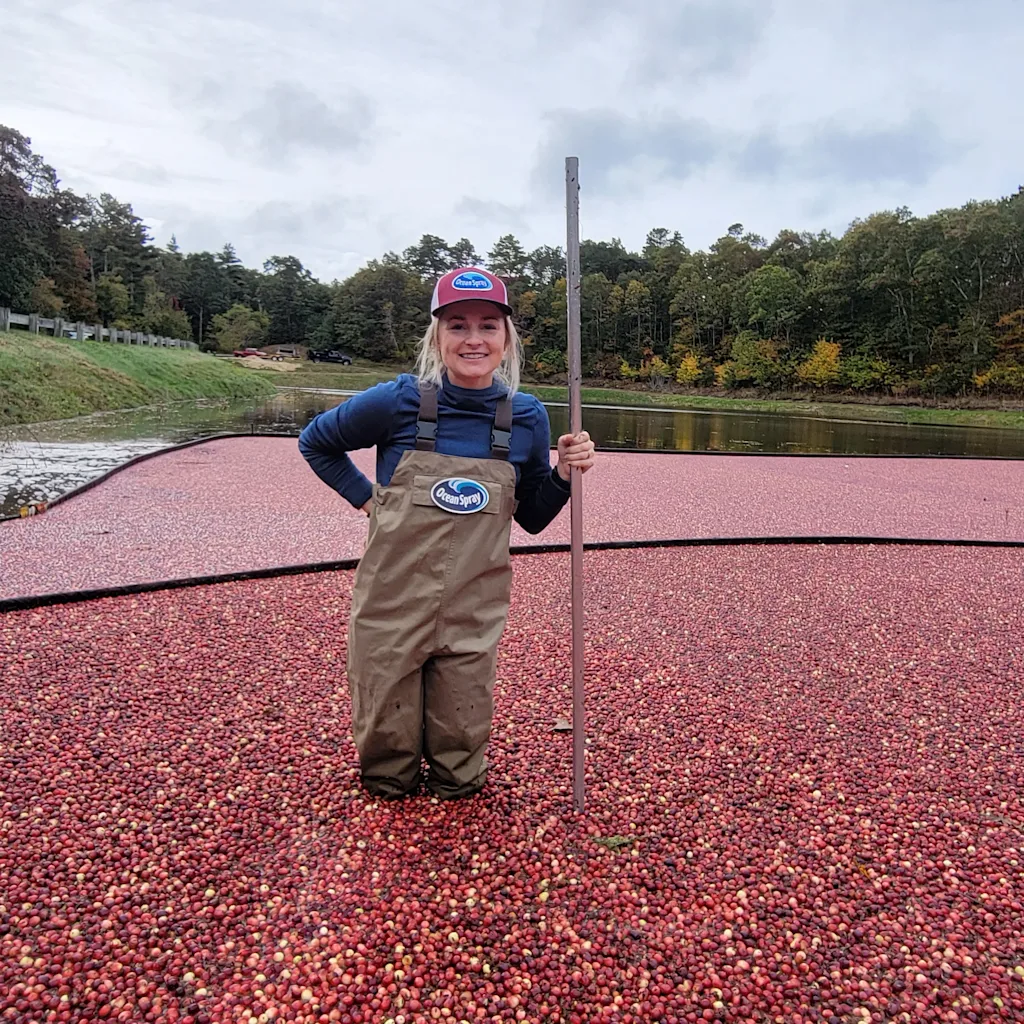
As harvest season approaches, a lot of work is happening behind the scenes to help Ocean Spray farmers prepare a successful cranberry crop. From field visits and research projects to answering farmers' questions and collecting critical data, Agricultural Scientist Crysta Taylor plays an important role in supporting farmers before, during and after the season.
We caught up with Crysta to learn more about her work, her passion for agricultural science, and what goes into preparing for harvest.
About Crysta
Tell us a little about your role at Ocean Spray and what you do.
I'm an Agricultural Scientist supporting Ocean Spray farmers across Massachusetts and one farmer in Rhode Island. My job is to help farmers make informed decisions throughout the season by providing technical resources and science-based recommendations tailored to our region.
Because cranberry growing conditions vary widely across Ocean Spray's regions, I work closely with a team of scientists who provide local expertise and support to farmers across North America.
What inspired you to pursue a career in agricultural science?
I've always loved science and been curious about where food comes from. While studying at the University of New Hampshire, I took a sustainable agriculture course and learned about agricultural extension professionals, people who connect farmers with research and practical resources.
I was immediately drawn to that work and knew I wanted a career helping farmers solve problems and make informed decisions.
What made you interested specifically in working with cranberries?
I'm a born-and-raised Massachusetts gal, so cranberries have always been part of the landscape.
What surprised me most was how much I would come to love both the crop and the people. Cranberries are incredibly unique, and every season brings something new to learn.
A Day in the Life During Pre-Harvest
What does a typical day look like for you as cranberry harvest season approaches?
No two days are exactly alike. I might spend one day visiting bogs, collecting samples, and evaluating crop conditions, and another answering farmer questions or tracking bloom and fruit development.
As harvest gets closer, I spend more time sampling fruit, reviewing farmer reports, assessing crop quality, and collecting data that helps forecast the crop.
What are some of the first things you check when you're out in the bogs?
Before I visit a bog, I review field history, cranberry varieties, and past yields. Once I'm there, I look at vine growth, nutrient status, and pest pressure, while also talking with the farmer about what they're seeing in the field.
The more information we gather, the better we can determine the best path forward.
What are you and your team focused on right now to help set farmers up for a successful harvest?
Our focus is helping farmers produce the highest-quality cranberry crop possible. We do that by providing science-based recommendations and practical support throughout the season so farmers have the information they need to make the best decisions for their operations.
The Science Behind the Cranberries
Many consumers only see cranberries once they're in stores. What happens behind the scenes before harvest begins?
A lot more than people realize. Cranberries require year-round care, from monitoring vine health and managing pests to maintaining irrigation systems and evaluating nutrient needs.
By the time harvest arrives, farmers have already spent months preparing for a successful crop.
How does science help farmers make decisions throughout the season?
Growing cranberries is both an art and a science. Research helps farmers understand what's happening in the field, while years of experience help them apply that knowledge.
The combination of science, observation, and farmer expertise is what makes successful cranberry production possible.
What's something most people don't know about cranberry farming?
One of the biggest misconceptions is that cranberries grow underwater. In reality, cranberry vines spend most of the year growing in sandy beds.
Flooding is used only at specific times of year, including harvest and winter protection.
Bonus Question
What do you find most rewarding about your work?
Any time I can help an Ocean Spray farmer solve a problem or make their job a little easier, it's rewarding. Supporting farmers and contributing to a successful harvest is one of the best parts of what I do.